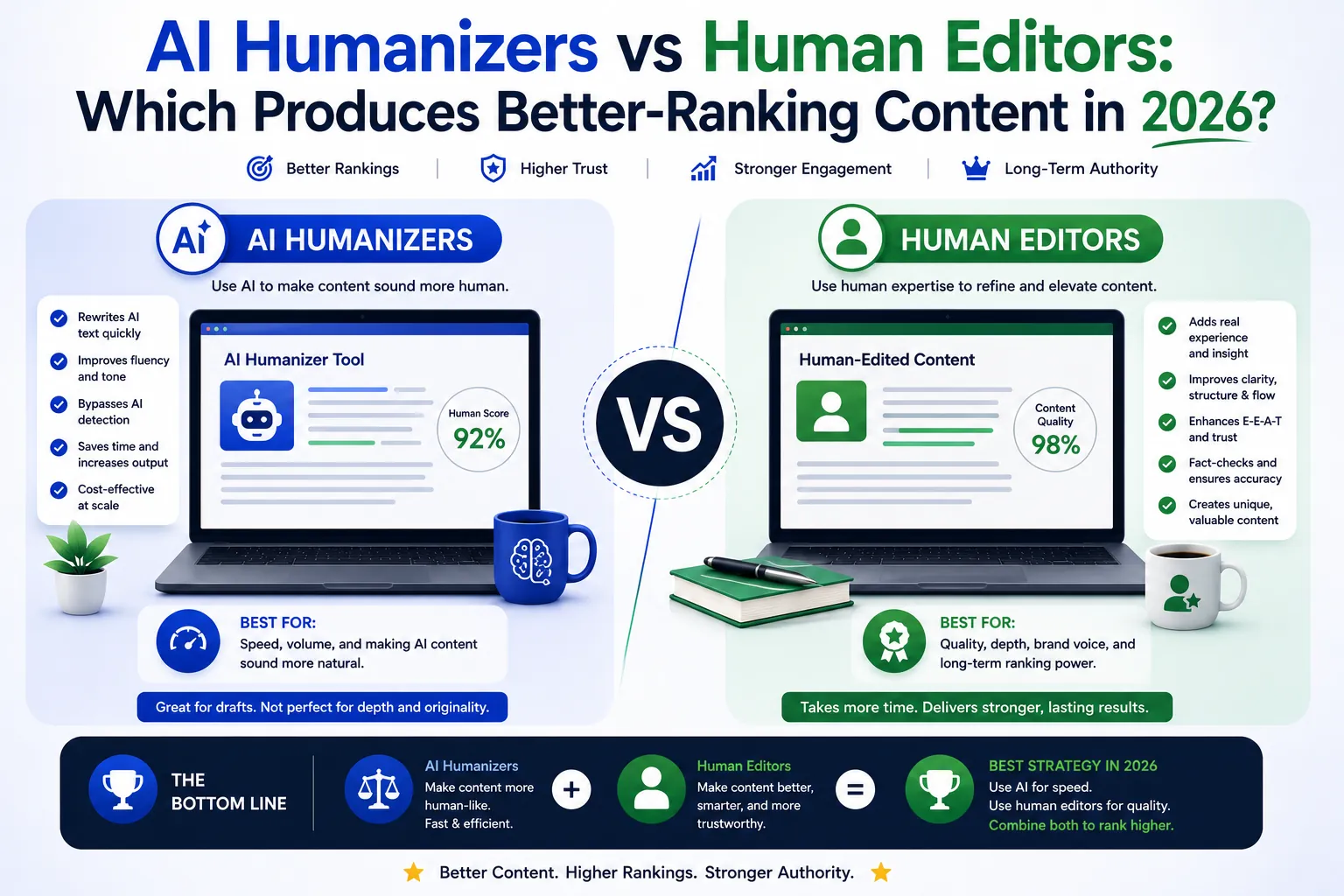
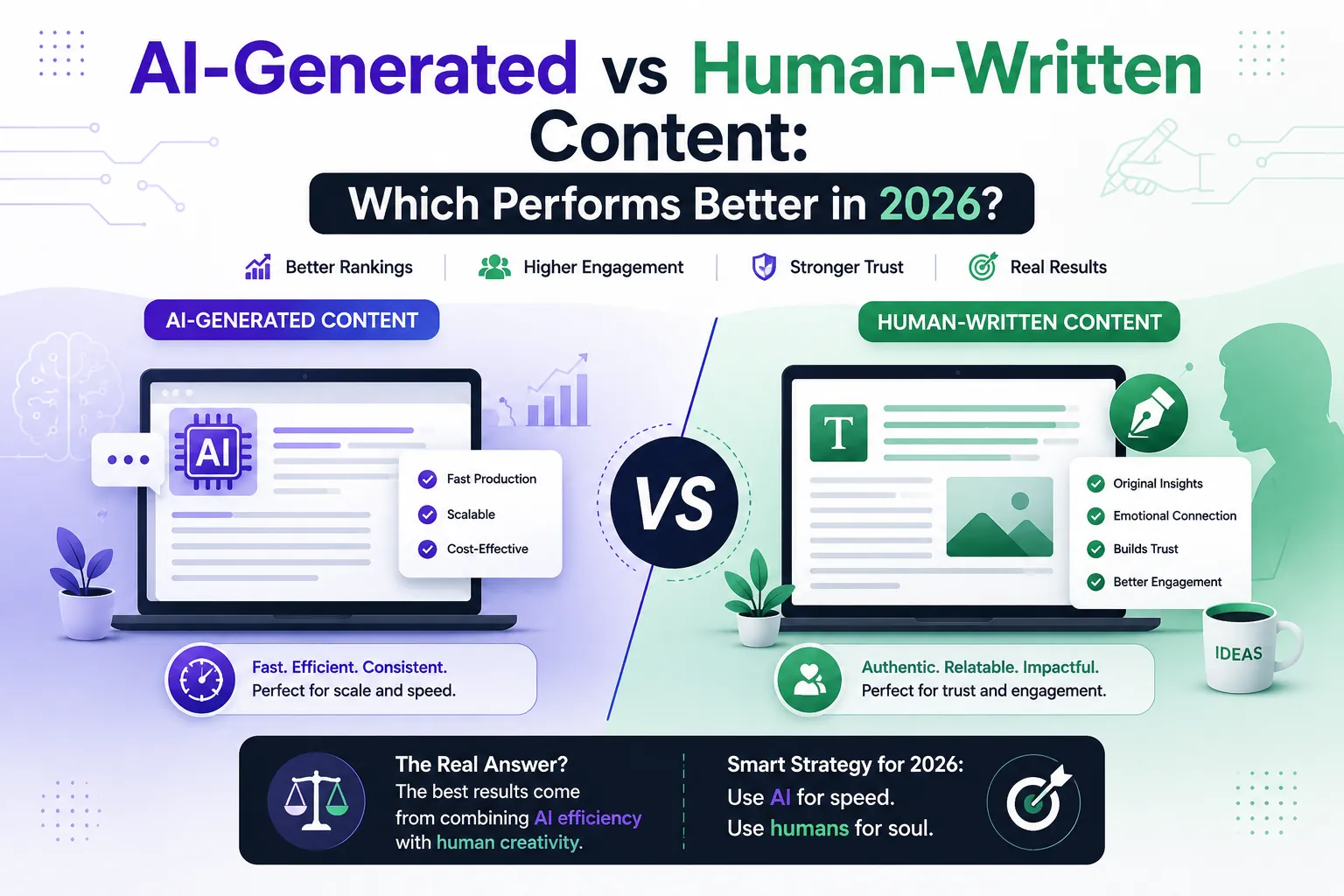
AI humanizers vs human editors is a content quality decision that directly affects your long-term search rankings. AI humanizers promise to rewrite AI-generated text so it sounds human and bypasses AI detection tools. Human editors do the same thing, but with actual understanding of the content.
The ranking data shows a clear winner. Human-edited AI consistently outperforms AI-humanized content for search rankings, E-E-A-T signals, and conversions. AI humanizers produce text that passes detection tools but lacks the depth, accuracy, and authority that Google and AI engines reward.
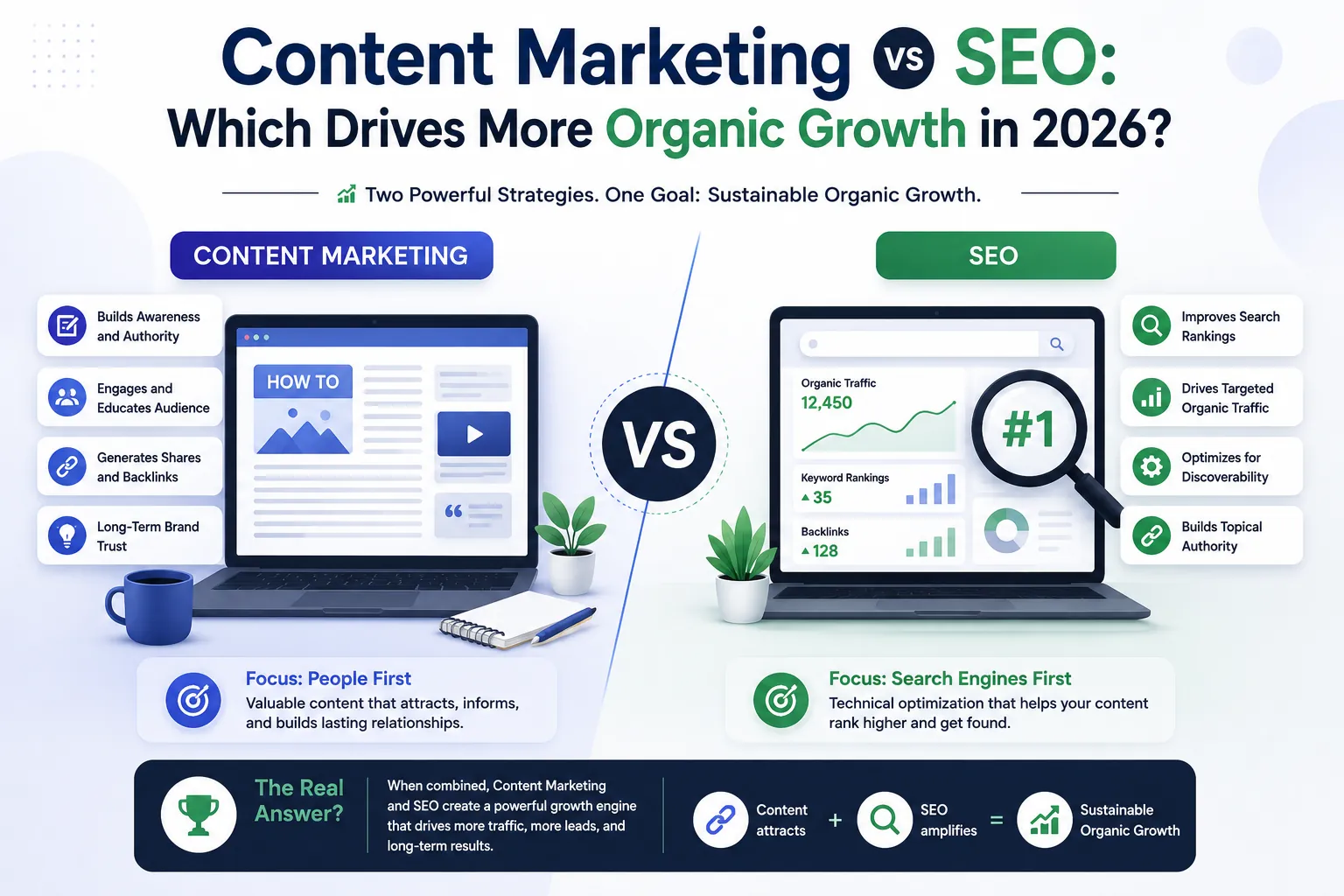
This is part of our ultimate guide on content marketing vs SEO vs copywriting vs content writing.
About the author: This guide was written by Amir Ali, an SEO content writer and conversion copywriter with four years of experience serving B2B and e-commerce clients across the USA and UAE markets. He has built 180,000 monthly organic visitors for a single e-commerce brand and published 500+ pieces across six industries. He is HubSpot Content Marketing Certified and founder of Clienvora.
What Are AI Humanizers?
AI humanizers are tools that rewrite AI-generated text to bypass AI detection systems.
Popular tools in 2026:
- Undetectable AI
- Humanize AI
- BypassGPT
- StealthWriter
What they claim to do:
- Bypass AI detection (Turnitin, Originality.ai, GPTZero)
- Improve readability and engagement
- Maintain SEO value while avoiding penalties
What they actually do:
- Replace predictable AI phrases with synonyms
- Vary sentence structure
- Add minor grammatical imperfections
- Remove common AI markers
What they cannot do:
- Add factual accuracy or domain expertise
- Generate original data or insights
- Improve E-E-A-T signals
- Guarantee long-term ranking performance
Ranking Test Results
A 2026 study across 300 articles in 10 niches compared three approaches head to head.
| Metric | AI-Humanized | Human-Edited AI | 100% Human |
|---|
| Articles tested | 100 | 100 | 100 |
| Top 50 at 30 days | 20-30% | 40-50% | 35-45% |
| Top 50 at 90 days | 10-15% | 30-40% | 30-40% |
| Top 50 at 180 days | 5-10% | 25-35% | 30-40% |
| Avg backlinks per article | 0.2-0.5 | 1-3 | 2-5 |
| Avg conversion rate | 0.3-0.8% | 1.5-3.5% | 2-5% |
| Dwell time | 45-60 seconds | 2-3 minutes | 3-4 minutes |
Key takeaways:
- AI-humanized content ranks initially but collapses by 180 days
- Human-edited AI retains 70-80% of its ranking positions at 180 days
- 100% human content ranks best for high-stakes topics but takes longer to produce
- Human-edited AI offers the best balance of speed, quality, and ranking sustainability
2026 Quality Thresholds
Google’s E-E-A-T framework sets the quality bar that content must clear for sustained rankings.
| Signal | AI-Humanized | Human-Edited AI | 100% Human |
|---|
| Experience | None (no first-hand) | Some (editor adds context) | Strong (original experience) |
| Expertise | Surface-level facts | Good (editor verifies claims) | Strong (domain expert) |
| Authoritativeness | Low (no credentials) | Medium (editor credentials) | High (named author) |
| Trustworthiness | Low (no accountability) | Medium (editor is responsible) | High (author is accountable) |
AI humanizers improve readability scores. They do not improve E-E-A-T signals. Human editors improve both because they can add original context, verify claims, and provide accountability.
When to Use Each Approach
Use AI humanizers when (rarely):
- You need to bypass AI detection for non-ranking content
- Budget is extremely limited (under $50 per article)
- Content is internal or low-stakes
- You accept the risk of ranking volatility
Use human-edited AI when:
- You need consistent blog output with quality control
- Budget is moderate ($100-$300 per article)
- Content is mid-stakes (blog posts, guides)
- You want sustainable rankings and conversions
Use 100% human content when:
- Content is high-stakes (pillar pages, thought leadership)
- Topic is YMYL (health, finance, legal)
- You need maximum authority and backlinks
- Budget allows $300-$1,000+ per article
| Approach | Cost per Article | Production Time | 6-Month ROI Estimate |
|---|
| AI humanizer | $10-$50 | 1-2 hours | Negative (rankings decline) |
| Human-edited AI | $100-$300 | 3-5 hours | Positive (sustained rankings) |
| 100% human | $300-$1,000+ | 6-10 hours | Strong (compounding asset) |
The cost per article for AI-humanized content is lowest. The cost per visitor over 12 months is highest because the content stops performing after 3-6 months and must be replaced.
Common Mistakes
Relying on AI humanizers for ranking content. AI humanizers change surface-level text patterns. They do not add the E-E-A-T signals that sustain rankings. The content looks human but performs like AI.
Skipping human fact-checking. AI-humanized content still contains the same factual errors as the original AI output. The humanizer tool does not verify accuracy.
Publishing AI-humanized content at scale. A site with 100 AI-humanized articles may see initial traffic growth, then a sharp decline as Google’s classifiers update and rankings drop.
Ignoring update cadence. AI-humanized content that goes stale loses rankings faster than human-written stale content because it starts with lower authority.
Checklist: Choosing the Right Approach
FAQ
Do AI humanizers actually bypass AI detection?
Most AI humanizers can bypass current AI detection tools. The problem is that detection bypass does not equal ranking performance. Content that passes detection can still rank poorly if it lacks depth and authority.
Is human-edited AI the same as AI humanizer?
No. Human-edited AI involves a person with domain expertise reviewing, fact-checking, and rewriting significant portions of AI-generated content. AI humanizers apply automated transformations without understanding the content.
Will Google penalize AI-humanized content?
Google penalizes low-quality content regardless of production method. AI-humanized content tends to be low quality because the tool cannot add original insight or verify accuracy. The penalty is not for the method. It is for the outcome.
What is the best budget option for quality content?
Human-edited AI. Use AI for the first draft, then have a subject matter expert or experienced editor rewrite key sections, add original data, and verify claims. The cost is moderate. The quality is close to 100% human.
Need help building a content workflow that balances AI efficiency with human quality? Contact Clienvora for a free content operations audit.
This guide was written by Amir Ali, founder of Clienvora. With four years of experience in SEO content writing and conversion copywriting for B2B and e-commerce clients across the USA and UAE, he has built 180K monthly organic visitors for a single brand and published 500+ pieces across six industries. Connect on LinkedIn or view his portfolio.
The B2B Organic Growth Dispatch
One short, useful email each month on SEO, copywriting, and GEO for B2B. No fluff, no spam.